Location
Osgoode, ON
Property Type
Residential
Completed
October 2026
Service
Asbestos Abatement
Project Facts
- Location
- Osgoode, Ontario (south of Ottawa)
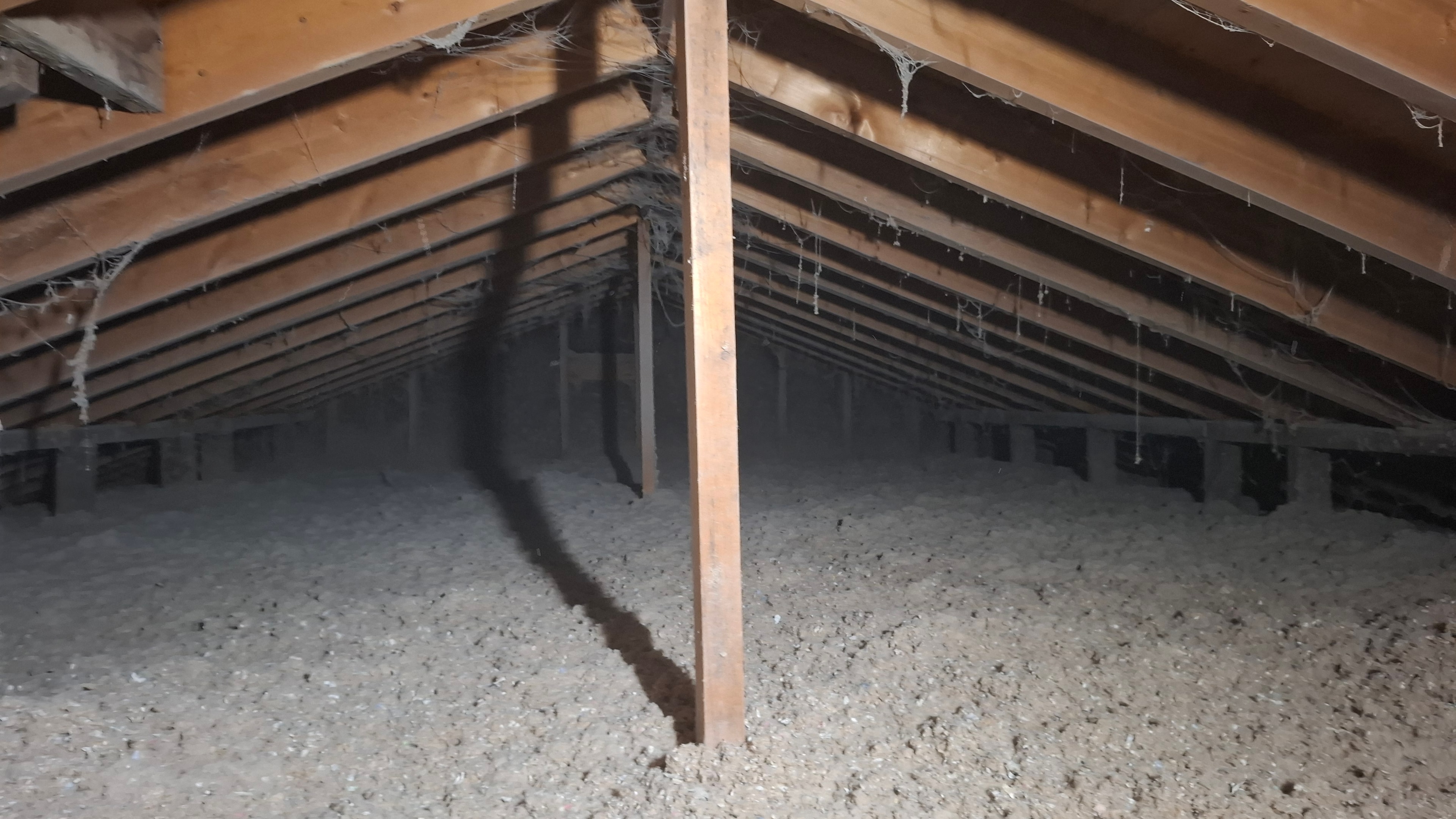
- Attic area
- Approximately 1,300 sq ft
- Abatement type
- Type 3 asbestos operation
- Regulation
- Ontario Regulation 278/05
- Air clearance
- Independent third-party environmental consulting
- Air clearance result
- Passed — both sampled locations below applicable criterion
- Insulation material
- Greenfiber Sanctuary blown-in cellulose
- Target R-value
- Approximately R60
- Project stages
- Two stages — abatement, then insulation reinstatement
- Contractor
- HCGEOT — Ottawa, Ontario
Project Overview
HCGEOT completed a comprehensive two-stage attic restoration at a residential property in Osgoode, Ontario, approximately 40 km south of Ottawa. The approximately 1,300-square-foot attic contained asbestos-containing vermiculite beneath existing loose-fill insulation and fibreglass batts. The project required professional Type 3 asbestos abatement under Ontario Regulation 278/05, followed by independent post-abatement air clearance testing, and subsequent reinstatement of the attic insulation to approximately R60. The work was scheduled in two separate stages to accommodate the homeowner's ongoing renovation activities.
Project Challenges
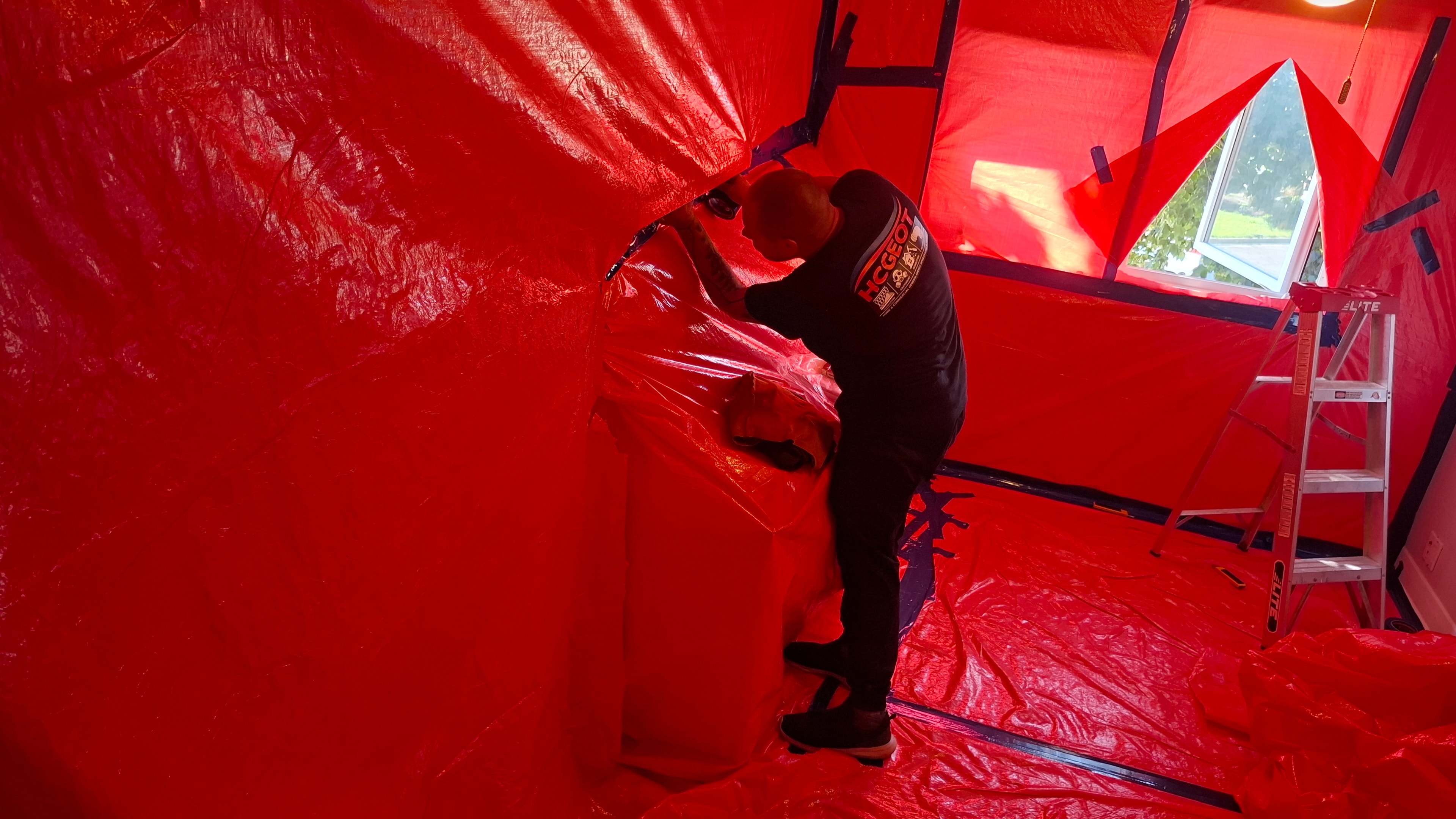
Vermiculite removal is classified as a Type 3 asbestos operation under Ontario Regulation 278/05, requiring a full sealed containment enclosure, HEPA negative air pressure, and appropriate personal protective equipment for all workers. The attic contained a combination of loose-fill insulation, fibreglass batts, and vermiculite, all of which required careful removal. Coordinating the two-stage project schedule around the homeowner's concurrent renovation work required careful planning to ensure the attic was properly sealed and protected between stages.
Scope of Work
- Pre-work site assessment and attic inspection — documentation of existing vermiculite, loose-fill, and fibreglass batt conditions
- Installation of Type 3 asbestos containment using 6-mil polyethylene barriers
- HEPA-filtered negative-air equipment and appropriate decontamination procedures
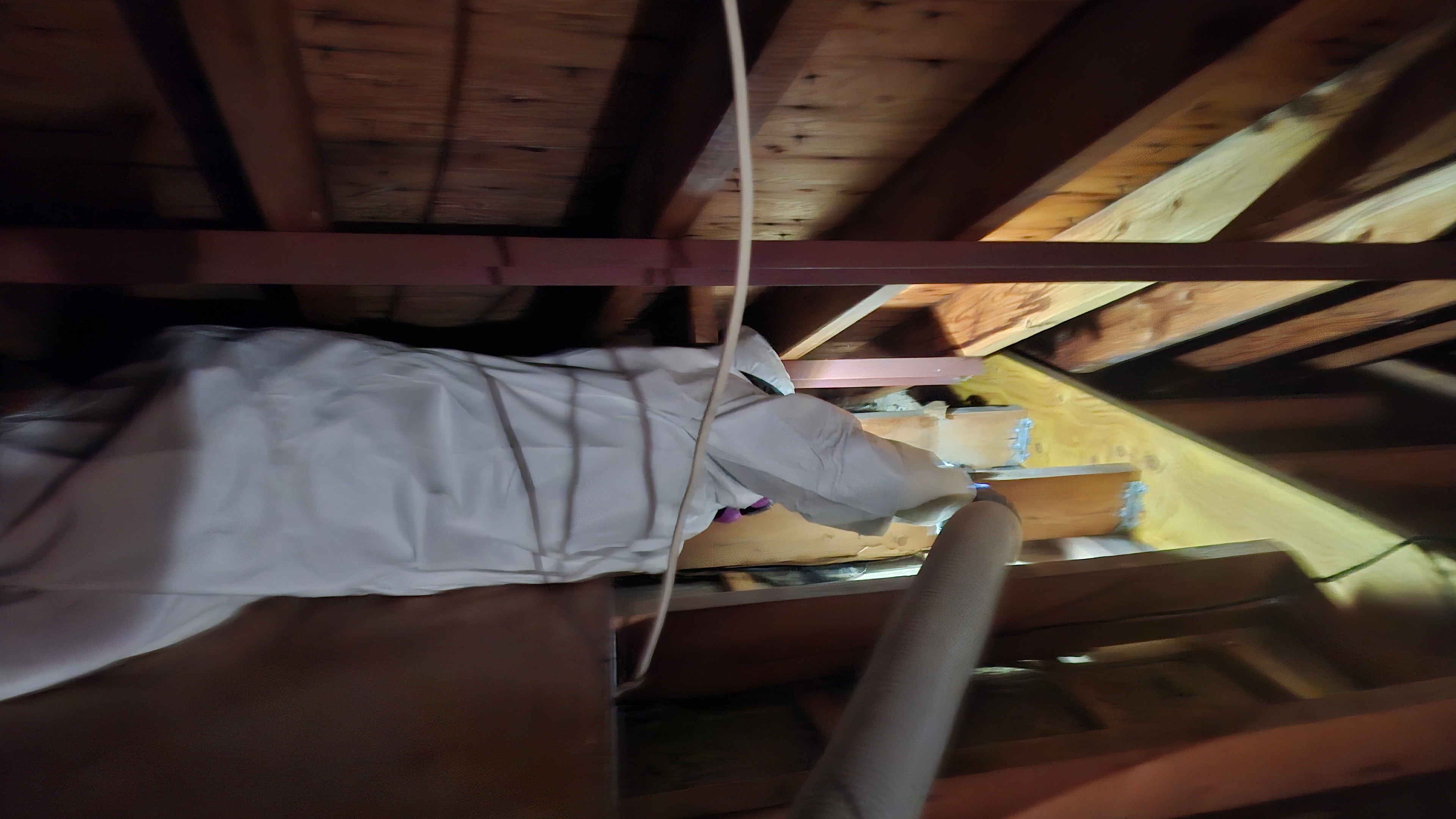
- Controlled removal of existing loose-fill insulation, fibreglass batts, debris, and asbestos-containing vermiculite
- Detailed HEPA cleaning of accessible attic framing and joist cavities
- Application of lockdown materials where required
- Appropriate packaging, transportation, and disposal of asbestos-containing waste in accordance with Ontario Regulation 278/05
- Independent post-abatement air clearance testing by a third-party environmental consulting firm — both sampled attic locations passed below the applicable clearance criterion
- Stage 2 (following homeowner renovation): installation of attic ventilation baffles at all eave bays
- Construction and installation of insulation retaining barriers
- Installation of Greenfiber Sanctuary blown-in cellulose insulation to approximately R60
- Approximately 1,300 square feet insulated — depth rulers installed throughout to confirm consistent coverage
- Final inspection and photographic documentation of completed insulation installation
Project Photos
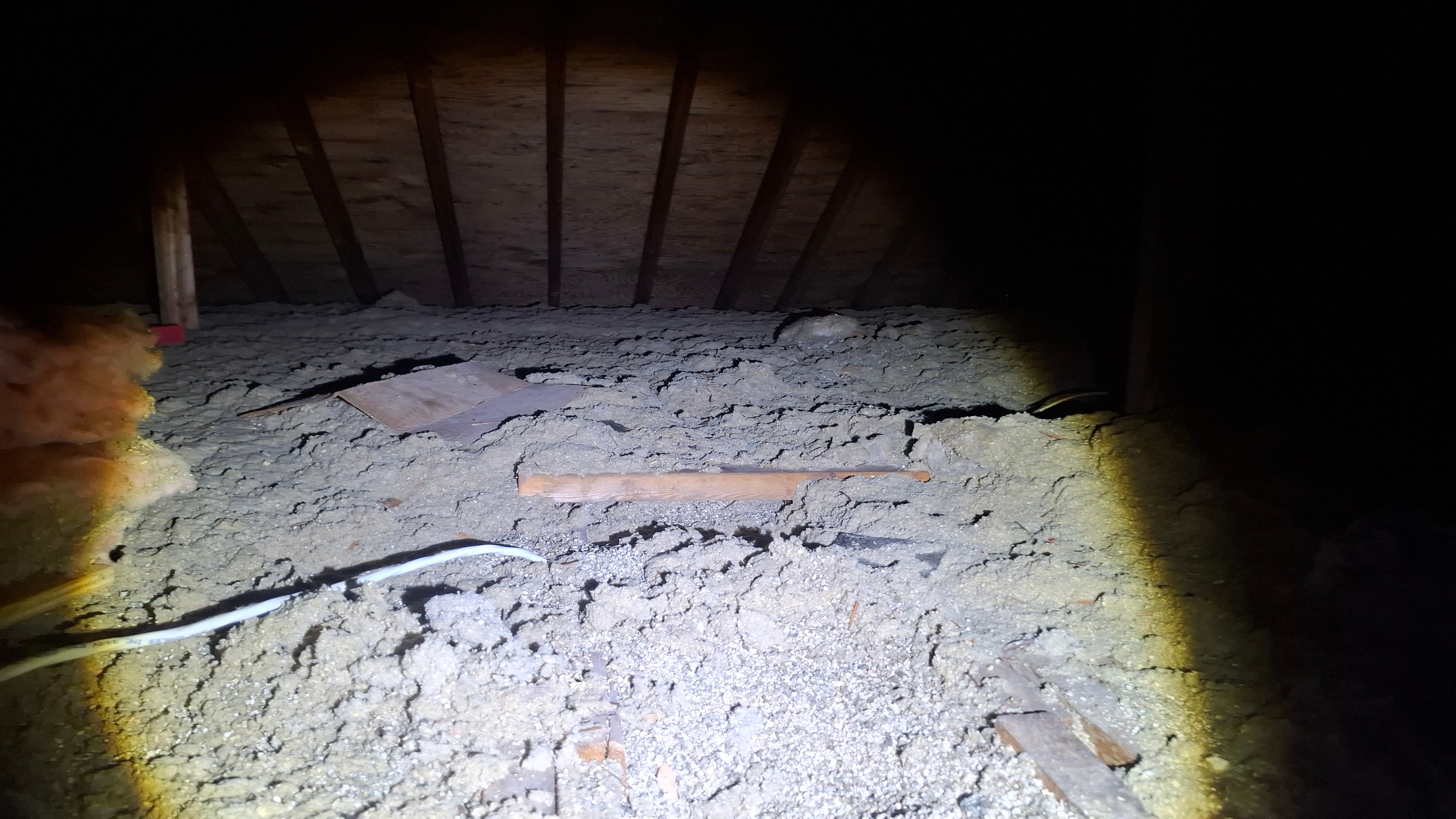
Before — vermiculite insulation on ceiling boards prior to abatement
Results
The attic successfully passed independent post-abatement air clearance testing by a third-party environmental consulting firm, with both sampled attic locations below the applicable clearance criterion. Following the homeowner's renovation work, HCGEOT returned to complete Stage 2 — installing ventilation baffles, retaining barriers, and Greenfiber Sanctuary blown-in cellulose insulation to approximately R60 across the full approximately 1,300-square-foot attic footprint. Depth rulers confirmed consistent coverage throughout, including restricted eave sections. The attic is now properly insulated to current energy efficiency recommendations for Ottawa's climate zone.
Related Services
This project involved multiple HCGEOT service areas. Learn more about each:
Frequently Asked Questions
What is vermiculite insulation, and can it contain asbestos?+
Vermiculite is a naturally occurring mineral that was widely used as attic insulation in Canada from the 1940s through the 1980s. A significant portion of the vermiculite sold in North America during that period came from a mine in Libby, Montana, which was contaminated with naturally occurring asbestos. Vermiculite insulation from that source may contain asbestos fibres. Laboratory testing is required to determine whether asbestos is present in a specific sample — the presence of vermiculite alone does not confirm asbestos, but it is treated as potentially hazardous until tested.
Can an attic be reinsulated after asbestos removal?+
Yes. Once asbestos abatement is complete and the attic has passed independent post-abatement air clearance testing, new insulation can be installed. In this Osgoode project, HCGEOT completed Type 3 vermiculite abatement, obtained independent air clearance from a third-party environmental consulting firm, and then returned to install Greenfiber Sanctuary blown-in cellulose insulation to approximately R60.
What is R60 attic insulation?+
R-value measures the thermal resistance of insulation — the higher the R-value, the better the insulation resists heat flow. R60 is the upper end of Natural Resources Canada's recommended range for attic insulation in Ottawa's climate zone. Achieving R60 typically requires approximately 19 inches of blown-in cellulose insulation. Proper attic insulation at this level can help reduce heat loss through the attic, improve indoor comfort, and support household energy efficiency.
Can you remove vermiculite and install new insulation as part of the same project?+
Yes, but the two stages cannot happen simultaneously. Asbestos abatement must be completed and the attic must pass independent post-abatement air clearance testing before new insulation can be installed. In this Osgoode project, HCGEOT completed the abatement in Stage 1, obtained independent air clearance from a third-party environmental consulting firm, and then returned for Stage 2 to install the blown-in cellulose insulation. The two stages were scheduled separately to accommodate the homeowner's concurrent renovation work.
How long does attic asbestos removal take?+
The duration depends on attic size, access conditions, containment requirements, the volume and type of existing insulation, and the time required for independent air clearance testing. Clearance testing results are typically available within one to two business days of sampling. HCGEOT provides project-specific timelines based on an on-site assessment — contact 613-218-6109 for a free assessment and quote.
Does HCGEOT provide attic insulation services in Ottawa and surrounding communities?+
Yes. HCGEOT provides vermiculite removal, asbestos abatement, and attic insulation services in Ottawa and surrounding communities including Osgoode, Nepean, Kanata, Orleans, Gloucester, and other areas in Eastern Ontario. The Osgoode project documented on this page is one example of HCGEOT's work in communities south of Ottawa.