Location
Ottawa, ON
Property Type
Residential
Completed
August 2026
Service
Asbestos Abatement
Project Overview
A homeowner in Ottawa contacted HCGEOT after an attic inspection revealed vermiculite insulation mixed beneath and around older fiberglass insulation across two attic areas totalling approximately 1,100 sq. ft. Given the known association between vermiculite insulation and asbestos contamination — particularly material originating from the Libby, Montana mine — the work was classified as a Type 3 asbestos operation under Ontario Regulation 278/05. HCGEOT managed the project from start to finish: establishing full containment, completing the abatement and HEPA cleaning, coordinating independent third-party air clearance testing, and returning after clearance to prepare the attic and install new blown cellulose insulation to R-60. The homeowner did not need to coordinate multiple contractors or manage the transition between abatement and insulation — HCGEOT handled the complete scope.
Project Challenges
The attic presented two distinct areas with different access points, low clearance in sections, and existing fiberglass insulation intermixed with the vermiculite — requiring careful separation and handling of both materials. Maintaining continuous negative air pressure across the full containment while working in a confined, low-clearance attic demanded precise setup and monitoring throughout the abatement. The attic structure also required thorough HEPA cleaning of all framing, sheathing, and surfaces following bulk removal before the space could be presented for independent air clearance testing.
Scope of Work
- Pre-work site assessment and attic inspection across both attic areas
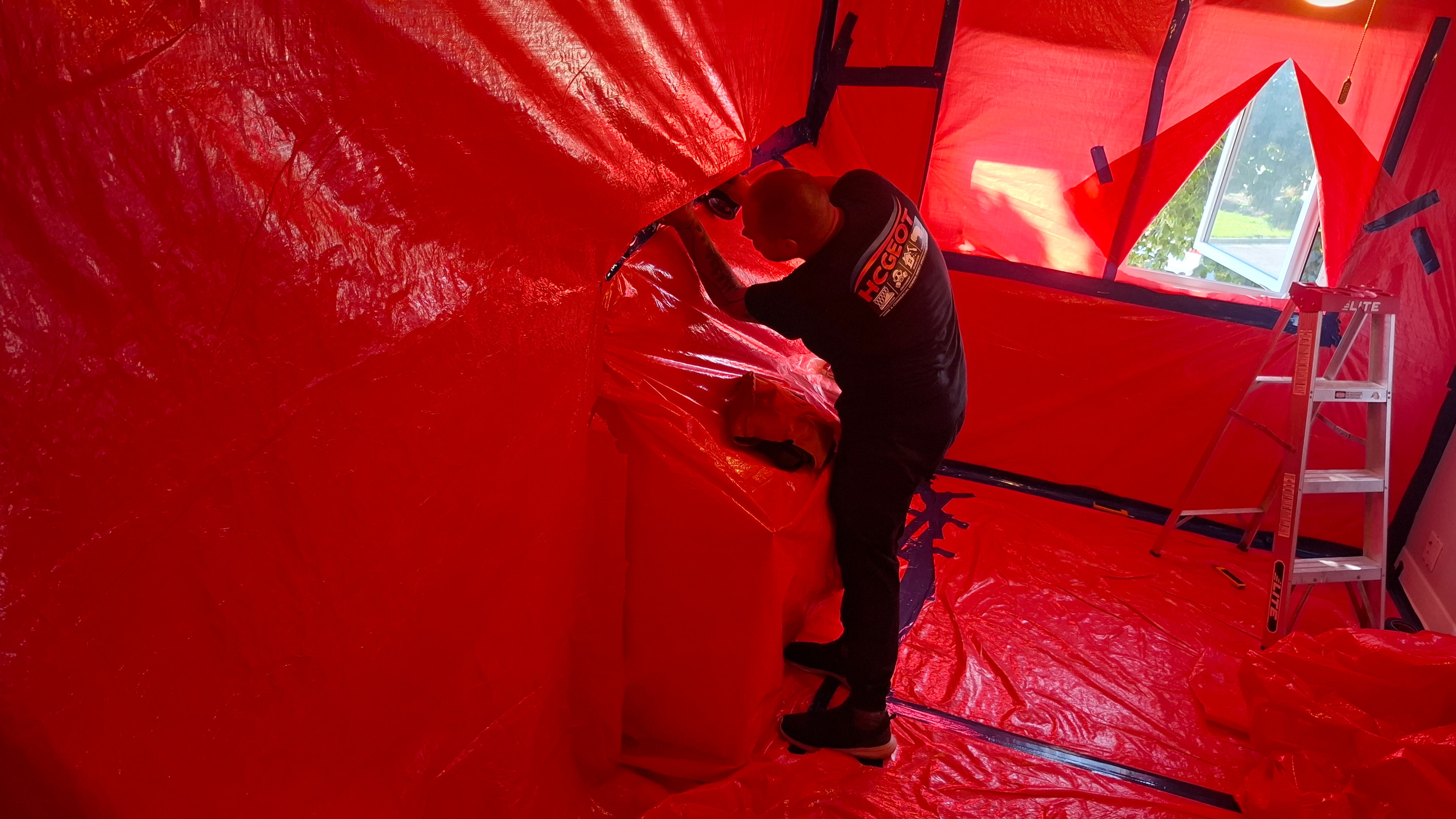
- Construction of full Type 3 sealed poly containment enclosure — floor-to-ceiling poly sheeting, taped and sealed at all seams and penetrations
- Construction of a three-stage decontamination unit at the containment entry point
- Installation of HEPA negative air pressure unit — continuous negative pressure maintained throughout abatement
- Smoke testing of containment to verify integrity before work commenced
- Wet suppression of vermiculite and existing insulation prior to removal
- Manual removal of all vermiculite insulation, existing fiberglass, and attic debris from both attic areas
- HEPA vacuuming of all attic framing, sheathing, ceiling surfaces, and structural members following bulk removal
- Application of lockdown encapsulant to attic surfaces where required
- Double-bagging and labelling of all asbestos-containing waste in accordance with Ontario Reg 278/05
- Waste transported and disposed of at a licensed asbestos disposal facility
- Full decontamination of all tools, equipment, and personnel through the decon unit on exit
- Dismantling and disposal of containment and decon structure
- Independent third-party PCM air clearance testing — attic passed clearance on first test
- Installation of attic ventilation baffles as required prior to reinsulation
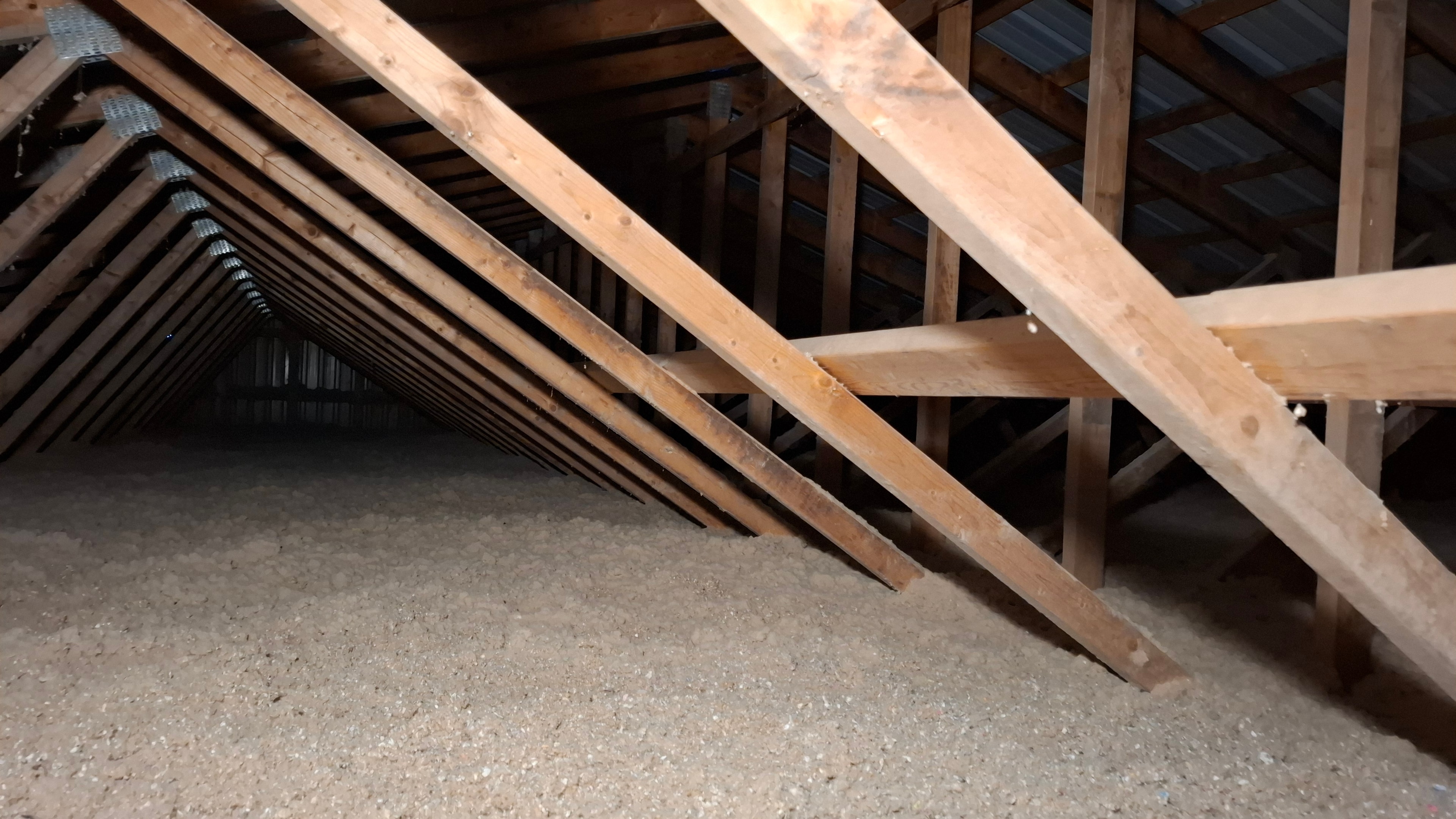
- Blown cellulose insulation installed to approximately R-60 across both attic areas
Project Photos
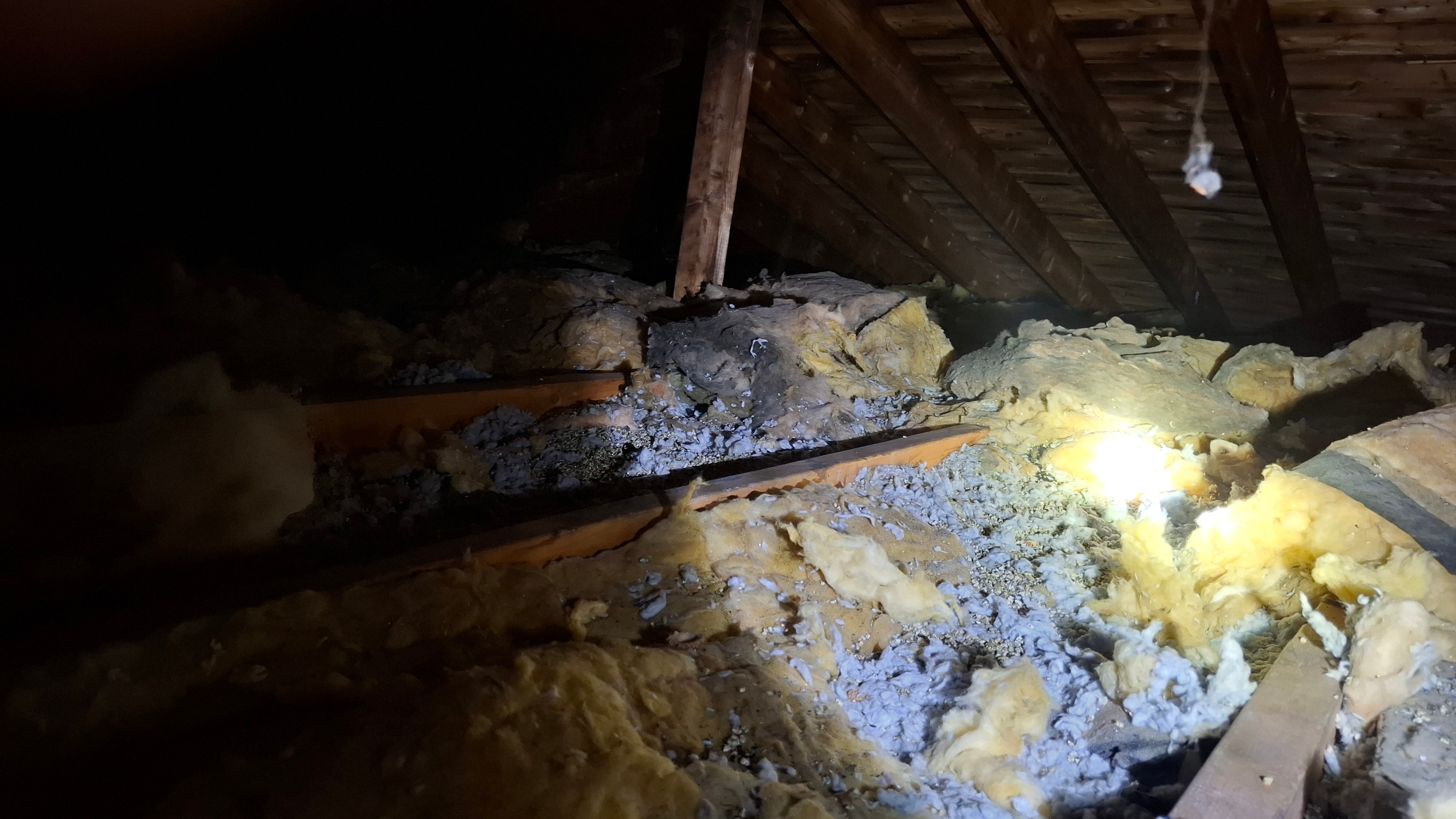
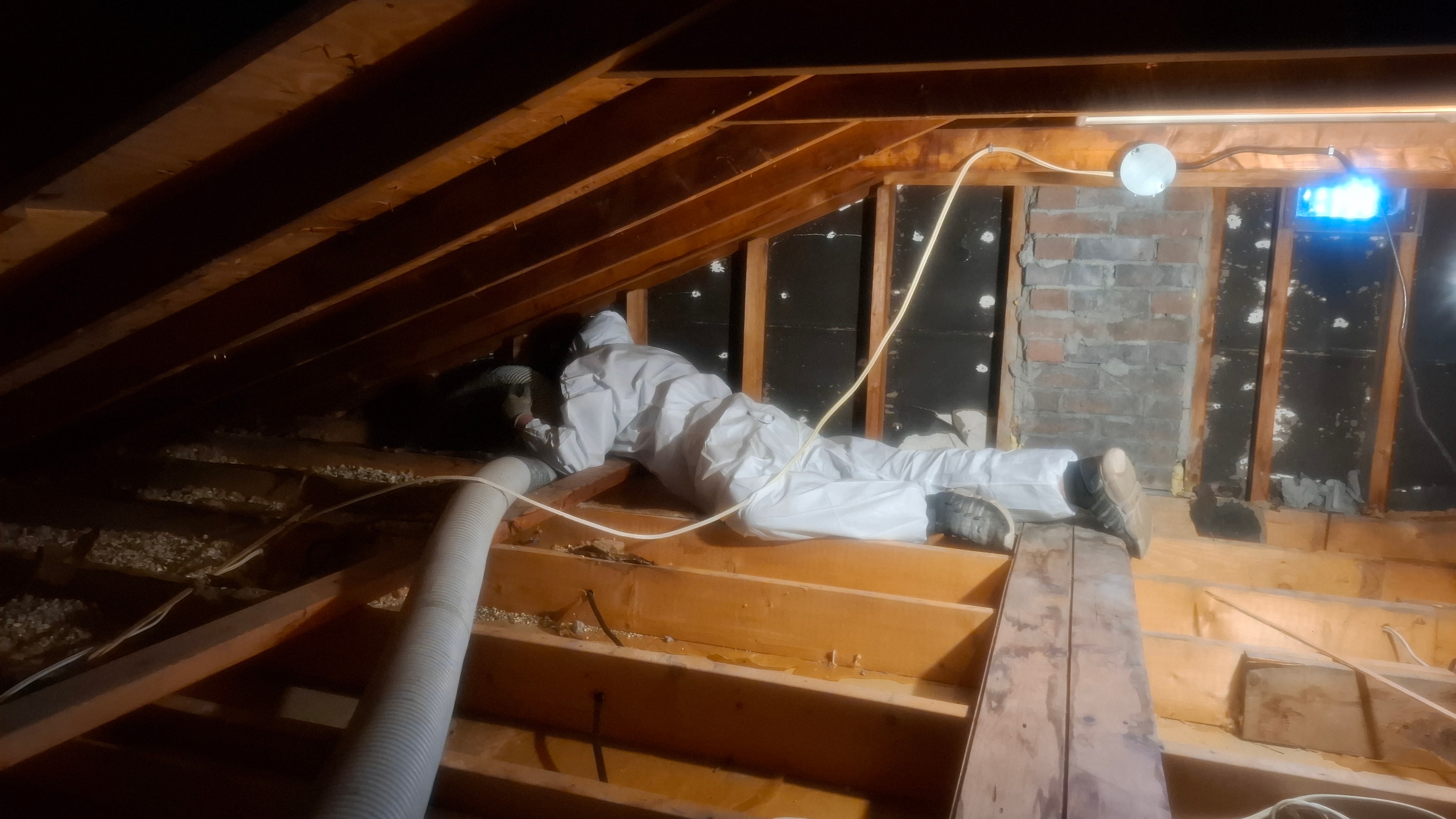
Existing attic conditions — vermiculite insulation mixed beneath and around older fiberglass, with visible attic debris
Results
All vermiculite insulation and existing attic debris were safely removed from both attic areas. The attic passed independent third-party PCM air clearance testing on the first test, confirming fibre levels were within acceptable limits. Following clearance, HCGEOT returned to prepare the attic — installing ventilation baffles and completing the reinsulation with blown cellulose to approximately R-60. The homeowner received a clean, properly insulated attic assembly and a signed clearance certificate, with the full project managed by a single contractor from initial abatement through to completed insulation.