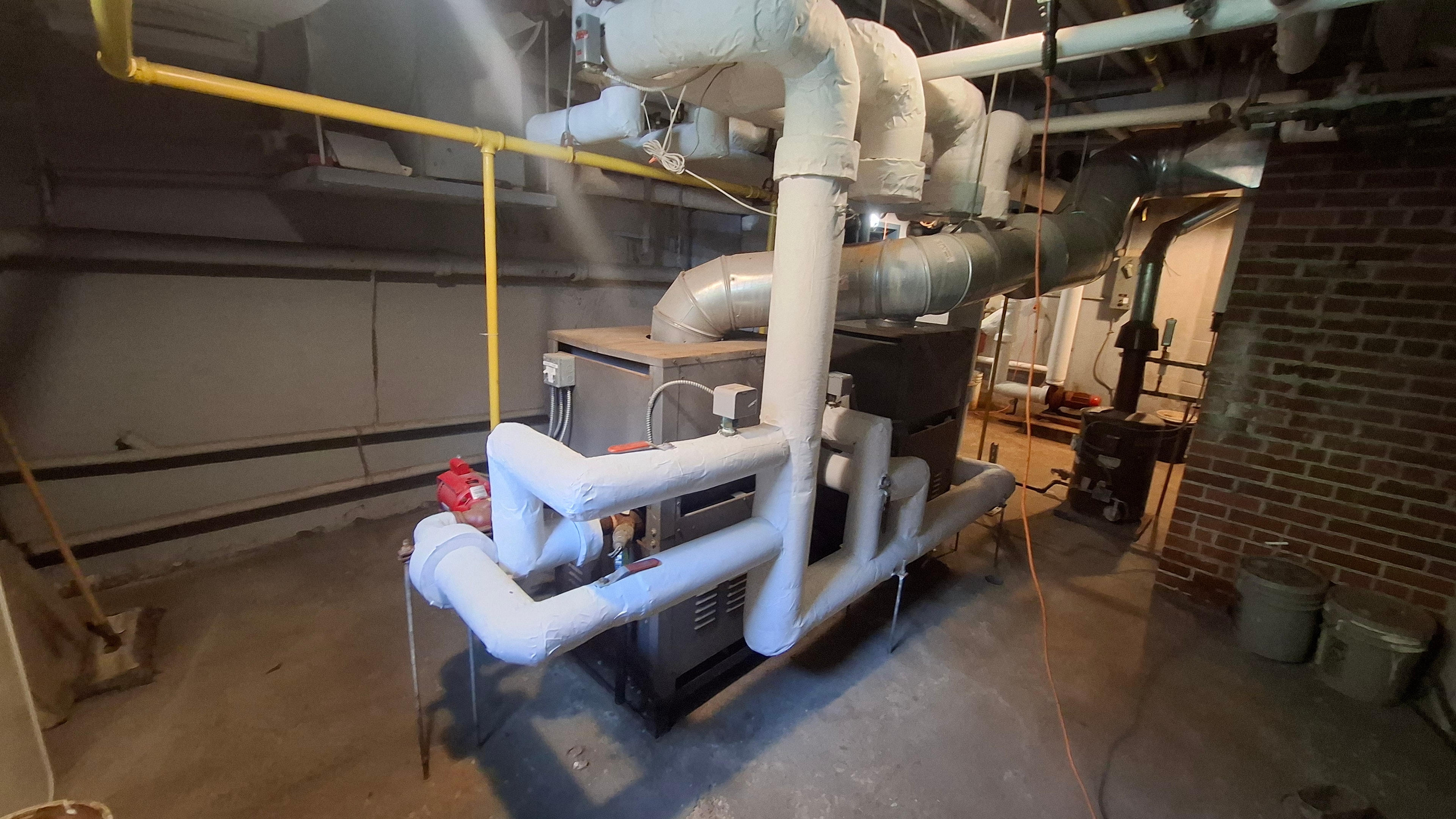
Mechanical Insulation in Ottawa: Pipe Insulation, Chilled Water & HVAC Systems
Mechanical insulation is one of the most technically demanding trades in commercial construction and building maintenance. Done correctly, it controls condensation, reduces energy loss, protects piping systems from temperature extremes, and extends the service life of mechanical equipment. Done poorly — or left uninsulated — it leads to dripping chilled water lines, heat loss from heating systems, and premature pipe deterioration.
HCGEOT provides commercial mechanical insulation services in Ottawa and Eastern Ontario, working with mechanical contractors, general contractors, property managers, and facility managers on new construction, mechanical room retrofits, and insulation repairs. This article explains the materials, systems, and considerations involved in a well-executed mechanical insulation scope.
What Is Mechanical Insulation?
Mechanical insulation refers to the thermal and acoustic insulation applied to piping, ductwork, equipment, and vessels in commercial and institutional buildings. Common applications include:
- Heating hot water (HHW) supply and return piping
- Domestic hot water (DHW) supply and recirculation lines
- Chilled water supply and return piping
- Refrigeration and glycol lines
- Steam and condensate piping
- HVAC supply and exhaust ductwork
- Boiler and chiller equipment insulation
- Mechanical room headers, manifolds, and distribution piping
Each system has different insulation requirements based on operating temperature, ambient conditions, and the risk of condensation or heat loss.
Insulation Materials for Mechanical Systems
Fiberglass Pipe Insulation with ASJ Jacketing
Fiberglass pipe insulation is the standard material for heating hot water, domestic hot water, and steam piping in commercial buildings. It is available in pre-formed pipe sections sized to fit standard pipe diameters, and is installed with all-service jacketing (ASJ) — a white kraft-foil-scrim laminate that provides a vapour retarder and a clean finished appearance.
Fiberglass is appropriate for operating temperatures from approximately 0°C to 230°C, making it suitable for most heating and domestic hot water applications. Insulation thickness is determined by the pipe diameter, operating temperature, and the applicable specification — typically ASHRAE 90.1 or the project mechanical specification.
Fittings, elbows, valves, and flanges require individual insulation covers or field-fabricated sections. These are often the most labour-intensive part of a mechanical insulation scope, particularly in mechanical rooms with dense pipe configurations and complex valve arrangements.
Closed-Cell Elastomeric Insulation (Armaflex)
Closed-cell elastomeric insulation — commonly known by the brand name Armaflex — is the standard material for chilled water piping, refrigeration lines, and other cold-service applications where condensation control is the primary concern.
Unlike fiberglass, elastomeric insulation has a low vapour permeability built into the material itself. This means the insulation acts as its own vapour retarder, provided all joints, seams, and penetrations are properly sealed with compatible adhesive. Any breach in the elastomeric envelope — an unsealed joint, a pinhole, or an improperly fitted elbow — allows warm moist air to reach the cold pipe surface, resulting in condensation inside the insulation and eventual dripping.
Vapour-retarder continuity is the most critical quality consideration on chilled water insulation work. HCGEOT seals all Armaflex joints and fittings with manufacturer-specified adhesive and inspects every section before the work is signed off.
Mineral Wool (Rockwool)
Mineral wool pipe insulation is used in high-temperature applications — steam piping, boiler connections, and exhaust systems — where fiberglass would exceed its temperature rating. It is also specified where fire resistance is a priority. Mineral wool is typically finished with aluminum or stainless steel jacketing rather than ASJ.
PVC and Aluminum Jacketing
In mechanical rooms, service corridors, and exposed locations, fiberglass or mineral wool insulation is often finished with PVC or aluminum jacketing for mechanical protection and a professional appearance. Aluminum jacketing is preferred in high-temperature or outdoor applications; PVC is common in indoor mechanical rooms and is easier to fabricate around complex fittings. Jacketing also protects the insulation from physical damage during routine maintenance and equipment servicing.
Condensation Control: Why It Matters on Cold-Service Piping
Condensation forms when the surface temperature of a pipe falls below the dew point of the surrounding air. On chilled water lines operating at 6°C to 12°C in a mechanical room with summer ambient conditions of 25°C and 60% relative humidity, the dew point is approximately 17°C — well above the pipe surface temperature. Without adequate insulation and a continuous vapour retarder, condensation will form on the pipe surface, drip onto equipment and floors, and eventually cause corrosion, mould, and structural damage.
Insulation thickness for cold-service applications is calculated to ensure the outer surface of the insulation remains above the dew point under design ambient conditions. Thicker insulation is required for lower operating temperatures, higher ambient humidity, or larger pipe diameters. HCGEOT follows project specifications and, where no specification is provided, references ASHRAE 90.1 minimum thickness tables as a baseline.
Pipe Supports, Elbows, Fittings, and Valves
A complete mechanical insulation scope covers more than straight pipe runs. Every elbow, tee, reducer, valve, flange, and pipe support requires individual attention:
- Elbows and tees
- Field-fabricated from the same insulation material as the straight sections, or fitted with pre-formed elbow covers. On elastomeric insulation, mitre-cut sections are bonded with adhesive and all seams are sealed.
- Valves and flanges
- Insulated with removable valve covers (for valves requiring regular maintenance access) or field-fabricated insulation sections. Removable covers allow maintenance without damaging the insulation system.
- Pipe supports and hangers
- Pipe supports on cold-service lines require insulated pipe shields or high-density insulation inserts to prevent thermal bridging — a direct conduction path from the cold pipe to the support structure that bypasses the insulation and causes condensation at the support point.
- Penetrations
- Where insulated piping passes through walls, floors, or ceilings, the insulation must be continuous through the penetration and the vapour retarder must be sealed at the penetration sleeve.
Mechanical Room Retrofits and Insulation Repairs
Many commercial and institutional buildings in Ottawa have mechanical rooms with aging, damaged, or incomplete insulation. Common conditions HCGEOT encounters on retrofit and repair projects include:
- Fiberglass insulation with deteriorated or missing ASJ jacketing, exposing the insulation to moisture and physical damage
- Chilled water lines with failed elastomeric insulation — cracked, delaminated, or with unsealed joints — resulting in active condensation and dripping
- Bare pipe sections where insulation was removed for maintenance and never replaced
- Uninsulated fittings, valves, and elbows on otherwise-insulated pipe runs
- Insulation damaged by water infiltration from roof leaks or plumbing failures above
Retrofit and repair work often requires removing and disposing of the existing insulation before new material is installed. Where the existing insulation contains asbestos — a consideration on pipe insulation in buildings constructed before the mid-1980s — abatement under Ontario Regulation 278/05 is required before any insulation work can proceed. HCGEOT handles both abatement and reinsulation as a single contractor where applicable.
For a completed example of a full mechanical room insulation scope, see HCGEOT's Ottawa diplomatic facility project, completed in July 2026. The scope covered chilled water lines with Armaflex elastomeric insulation and domestic hot water and heating piping with fiberglass and ASJ jacketing throughout the mechanical room.
What to Include When Requesting a Mechanical Insulation Estimate
Mechanical insulation pricing depends on pipe sizes, linear footage, insulation material and thickness, fitting and valve counts, access conditions, and project schedule. To receive an accurate estimate, contractors and facility managers should provide:
- Mechanical drawings or isometrics showing pipe sizes, system types, and routing
- Project specification identifying the specified insulation materials, thicknesses, and jacketing requirements
- Pipe schedule or bill of materials listing pipe diameters and approximate linear footage by system
- Fitting and valve schedule or a count of elbows, tees, valves, and flanges by size
- Site access conditions — mechanical room dimensions, ceiling heights, scaffold or lift requirements
- Project schedule — tender closing date, anticipated start date, and substantial completion date
Where drawings are not available — common on retrofit and repair projects — HCGEOT can perform a site visit to measure and assess the scope before providing a quotation.
Frequently Asked Questions
What types of buildings does HCGEOT provide mechanical insulation for?
HCGEOT works on commercial, institutional, and industrial buildings in Ottawa and Eastern Ontario — including office buildings, government facilities, diplomatic facilities, multi-unit residential buildings, and light industrial properties. Both new construction and retrofit/repair projects are within scope.
What is the difference between fiberglass and elastomeric insulation for pipes?
Fiberglass pipe insulation is used on hot-service piping — heating hot water, domestic hot water, and steam — where the goal is to reduce heat loss. Elastomeric insulation (Armaflex) is used on cold-service piping — chilled water, refrigeration, and glycol lines — where the goal is to prevent condensation. The two materials have different temperature ranges, vapour permeability characteristics, and installation methods. Using the wrong material for a given system is a common source of mechanical insulation failures.
Why is vapour-retarder continuity so important on chilled water insulation?
Chilled water pipes operate below the ambient dew point. Any gap in the vapour retarder — an unsealed joint, an improperly fitted elbow cover, or a pinhole — allows warm moist air to reach the cold pipe surface inside the insulation. The moisture condenses, saturates the insulation, and eventually drips. Once elastomeric insulation is wet inside, it must be removed and replaced. Maintaining a continuous, sealed vapour retarder during installation is far less costly than a retrofit repair after the fact.
Does HCGEOT provide mechanical insulation for new construction projects?
Yes. HCGEOT works directly with mechanical contractors and general contractors on new construction projects, providing mechanical insulation as a subcontract scope. Tender packages with drawings and specifications can be submitted for pricing.
Can HCGEOT handle both asbestos abatement and mechanical reinsulation?
Yes. On buildings where existing pipe insulation contains asbestos — a consideration for buildings constructed before the mid-1980s — HCGEOT can perform the abatement under Ontario Regulation 278/05 and then complete the reinsulation as a single contractor. This eliminates the need to coordinate separate abatement and insulation trades.
How long does a mechanical room insulation project take?
Duration depends on the scope — the number of pipe systems, linear footage, fitting complexity, and access conditions. A straightforward mechanical room retrofit may be completed in a few days; a larger new construction scope may run several weeks. HCGEOT provides a project schedule as part of the quotation process.
What areas does HCGEOT serve for mechanical insulation?
HCGEOT serves Ottawa and the surrounding Eastern Ontario region, including Kanata, Nepean, Gloucester, Barrhaven, Stittsville, Orleans, and surrounding communities. Commercial and institutional projects throughout Eastern Ontario are considered on a project-by-project basis.
Ready to discuss a mechanical insulation project? Contact HCGEOT for a commercial estimate in Ottawa and Eastern Ontario. You can reach us at 613-218-6109 or info@hcgeot.ca.
Learn more about HCGEOT's mechanical insulation services in Ottawa, or explore our completed project portfolio including the Ottawa diplomatic facility mechanical room insulation project.
Need Help with Your Ottawa Home?
Contact HCGEOT for a free onsite estimate. We serve all of Ottawa and surrounding areas.
Related Articles
SAFE ASBESTOS REMOVAL IN OTTAWA: PROTECT YOUR HOME AND HEALTH
When I started planning a kitchen reno in my old Centretown home, I never imagined asbestos would be part of the equation. But there it was, hiding in the old floor tiles.
Attic InsulationWhy should you check your attic insulation?
Proper insulation plays a vital role in maintaining your home's comfort and energy efficiency. One of the most important areas to insulate is your attic.